Product Quality and Safety
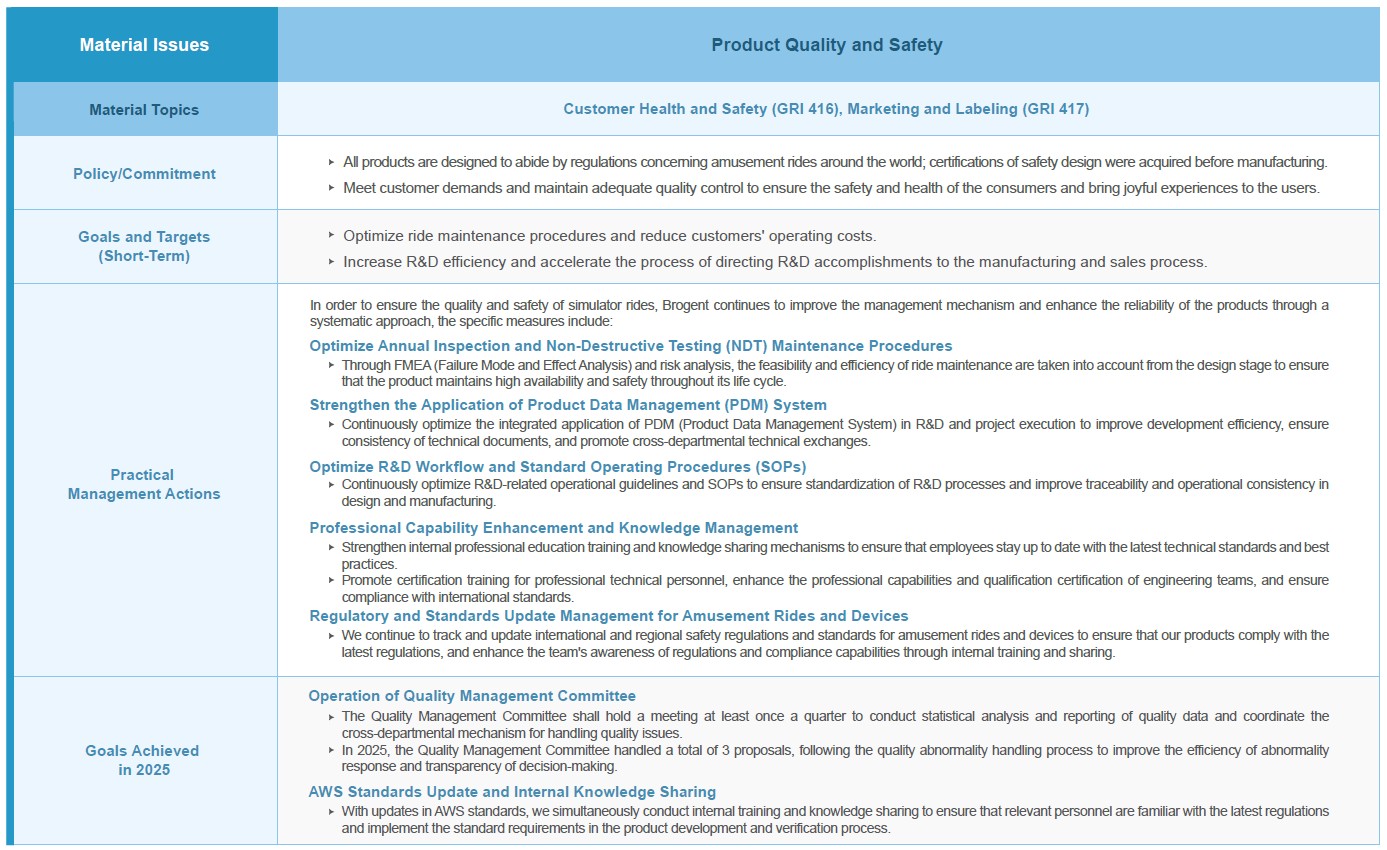
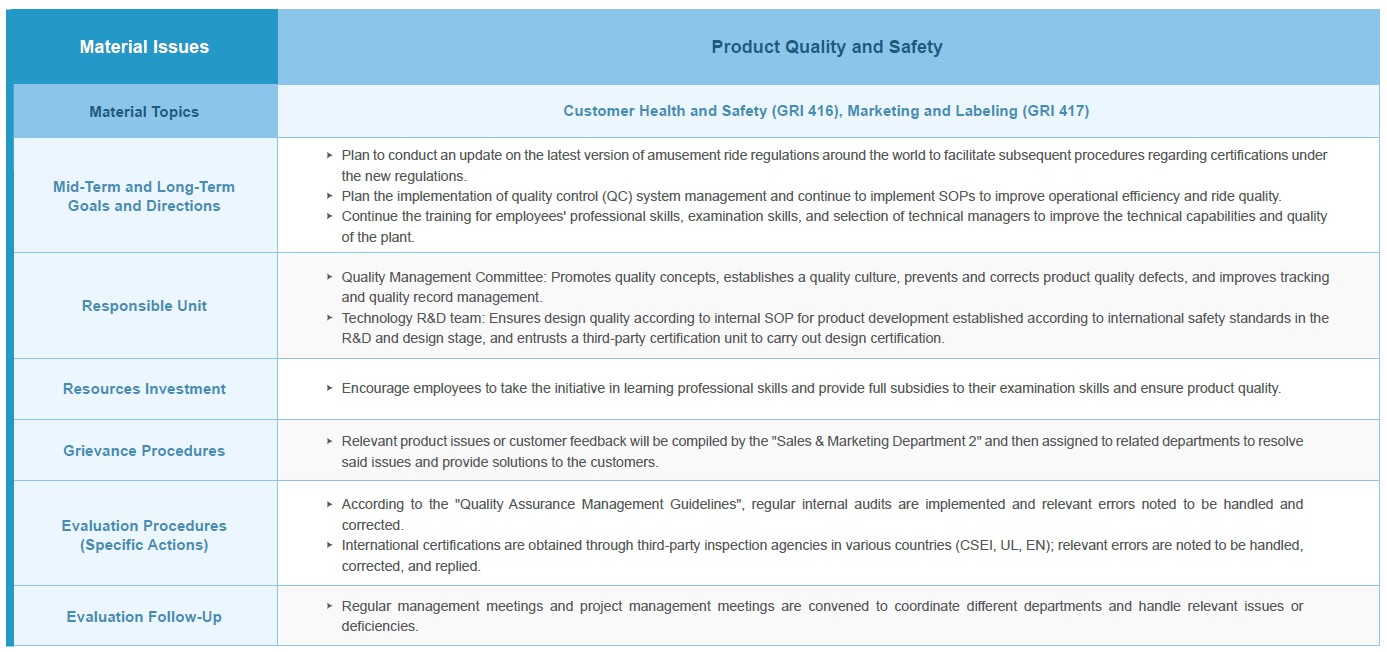
Simulator rides failure will not only affect the operator's revenue, but might also directly cause physical harm to riders. Therefore, high product safety standards are one of Brogent's core philosophies. In addition to high standards for quality and performance to achieve the goal of customer satisfaction, we also focus on benefiting customers, shareholders, employees, and society when developing simulator rides. Brogent implements the most rigorous quality and safety control at every stage of the product life cycle (design, manufacturing/shipment, installation, delivery, maintenance), so no fines or violations occurred in 2025.
▍Quality Control Unit
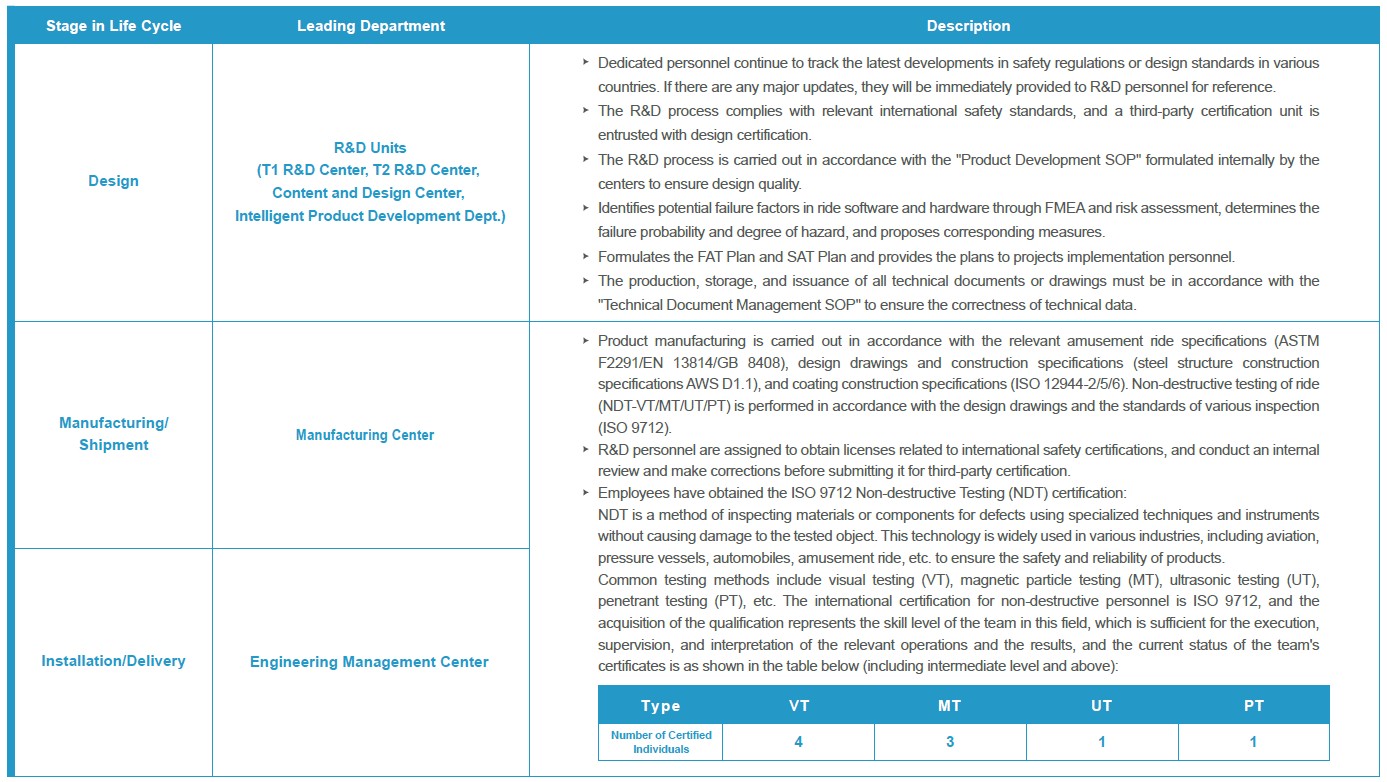
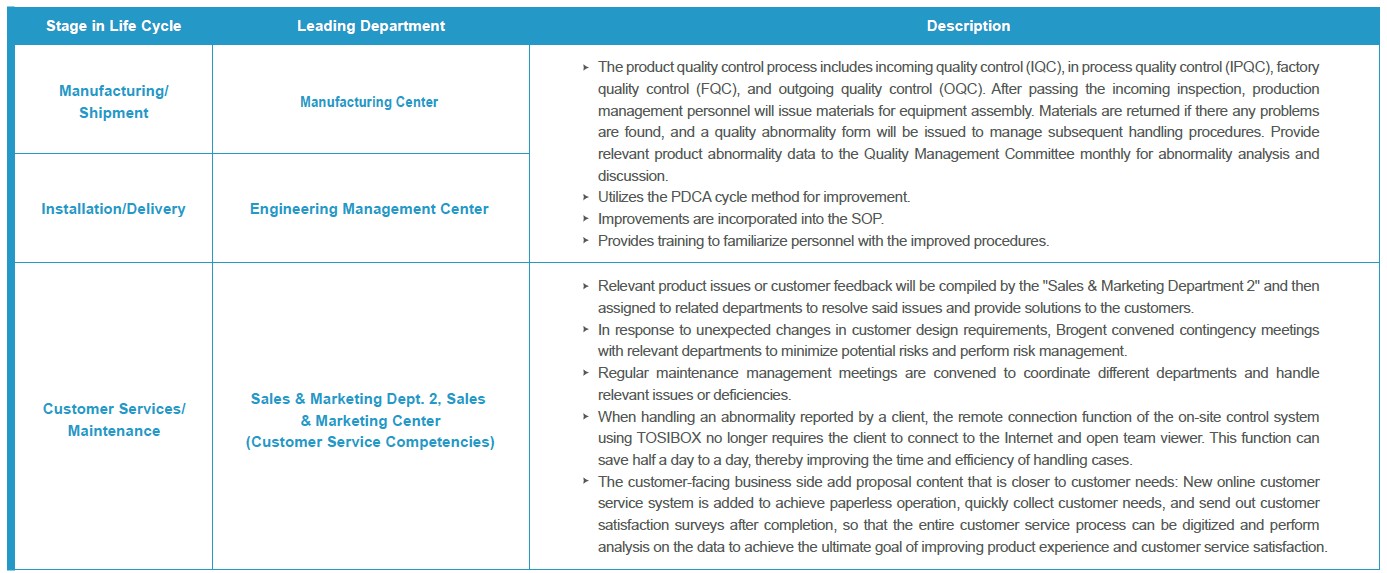
▍Quality Management PDCA Cycle Solution
The solution is applied to improve assembly and repair technologies and reduce outsourcing costs. Following a series of research and testing and overcoming process challenges, the Company is now able to perform the assembly of safety belt buckles and the repair of LED circuit boards in-house. This progress reduces costs by approximately 20% or more, achieving the goal of optimization.
▍Certification Management
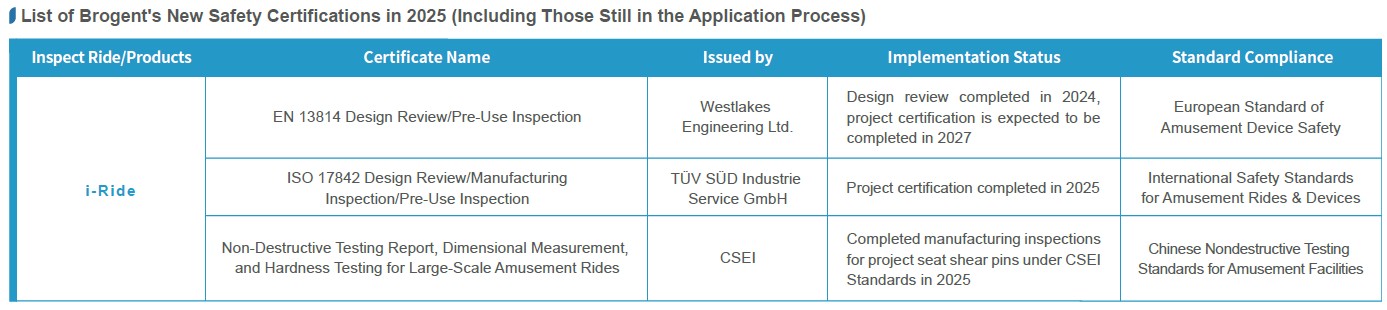
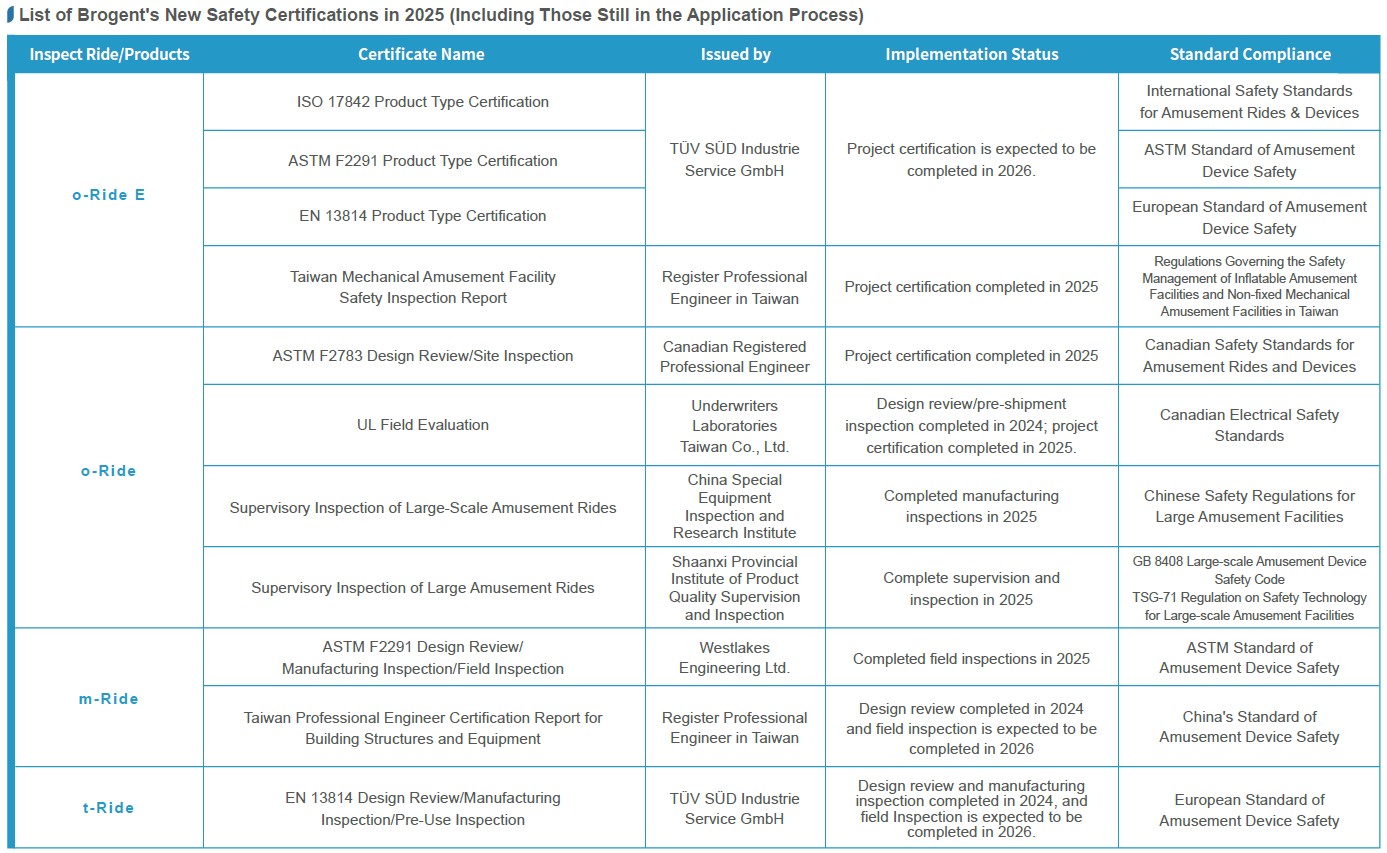
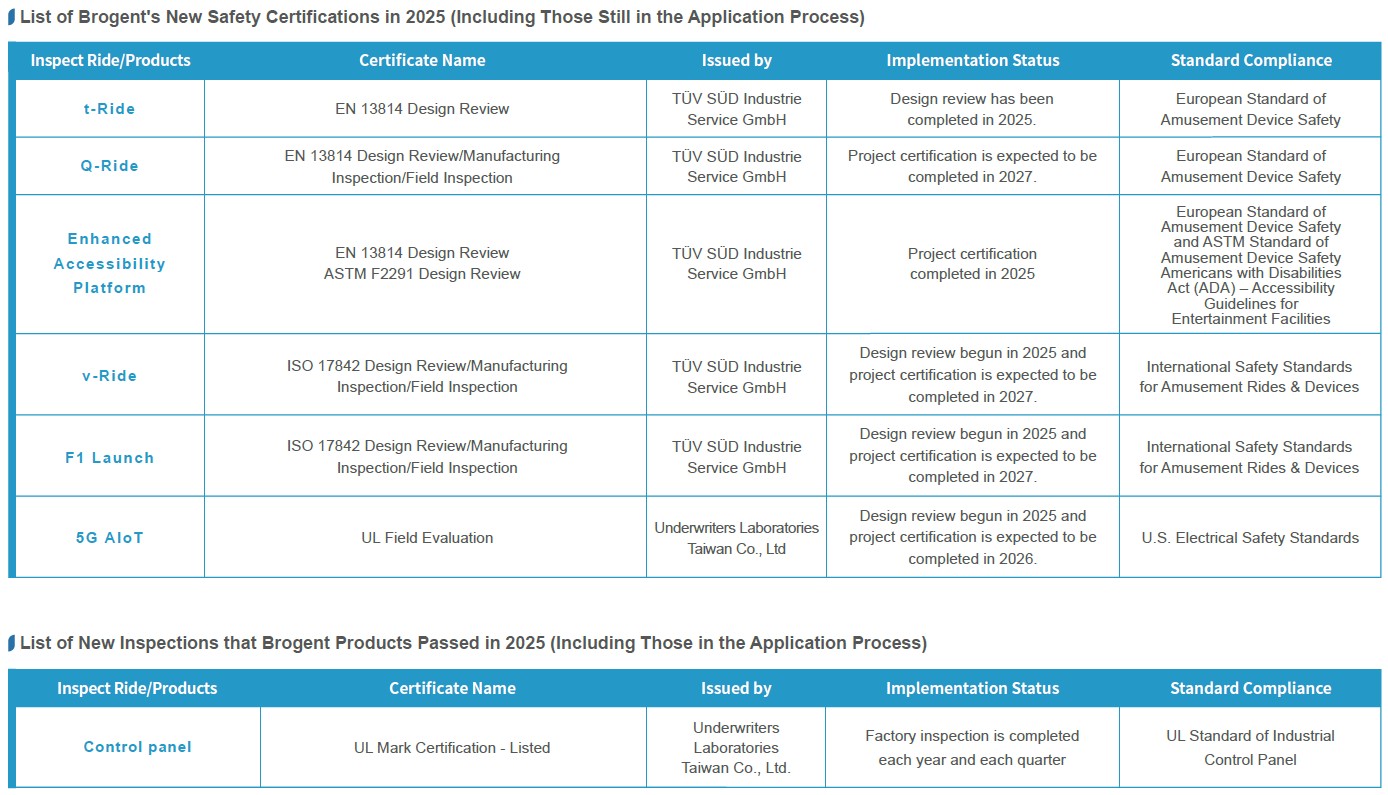
Brogent ensures that its products meet the quality requirements and safety standards at all stages of production. All hardware ride is certified to major international standards including ASTM, UL, GB and EN; the software undergoes rigorous testing and quality control at each stage of development to ensure technical stability and security. Through comprehensive management measures, Brogent is committed to creating high-quality products and cutting-edge technologies. In addition, the Company has also strengthened the management and optimization of certification documents by reporting the quality management process to local governments and certification bodies through complete records to ensure product compliance.
♦ AWS Update on Structural Welding Code – Steel and Impact
In 2025, AWS introduced significant revisions to steel structural welding standards through the release of AWS D1.1/D1.1M:2025, covering general design, procedure qualification, and inspection requirements. This update focuses on strength requirements for welded joint design, including newly added or reinforced LRFD-related design provisions, filler metal strength matching and toughness requirements, reorganization of prequalified WPS forms and joint detail illustrations, and expanded and clarified inspection provisions, including MT/PT and visual acceptance criteria. For Brogent, the update impact extends beyond internal manufacturing processes to supply chain governance. Accordingly, the Company must revise design specifications and procurement technical terms, update WPS/PQR documentation, welder qualification requirements, inspection plans, and NDT procedures, and ensure outsourced fabrication compliance with the updated code through audits and document traceability to reduce welding defects and rework risks, enhance structural safety and quality consistency, and reinforce Brogent's long-term ESG commitments, particularly in governance and product safety responsibility.
In addition, in order to improve the accessibility of simulator rides, Brogent also pays attention to the relevant regulations of the Americans with Disabilities Act (ADA) in the United States to ensure that the design and operation of the ride meet accessibility requirements. This includes the entrance and exit design of simulator rides, the adaptability of seats and safety devices, and improved accessibility for people with disabilities to ensure that all users can enjoy the ride experience equally and safely. With the growing global emphasis on inclusivity and accessible design, Brogent proactively implement the ADA and related standards to enhance the popularity and compliance of our products.
Brogent has taken the initiative to collect and follow the relevant regulations (such as CE certification) for the newly developed miniaturized simulator rides before installing them in theme parks, shopping malls and indoor and outdoor amusement parks. Furthermore, during the production planning and material selection stages, we conduct electromagnetic compatibility (EMC) testing and verification for electrical equipment to ensure that the products comply with safety standards. With the expansion of our product line, Brogent actively responds to regulations differences across countries. It introduces corresponding standards in the design, manufacturing, maintenance and use stages to improve ride safety in response to safety regulations for amusement ride in different markets, and performs necessary certification procedures based on customer needs to ensure product compliance and competitiveness in the global market.